
My academic writing on dance can be found here.
Learning and understanding my position as a dancer, researcher, and student taught me the ways I can acknowledge the original and current hereditary practitioners of this art. In doing so, I recognize the multiple fraught histories of Bharatanatyam and its affiliated arts. I recognize that the intersections of race, class, caste, gender, sexuality, among other entities have enabled me in practicing this art form to the extent that I have.
This acknowledgment is part of my commitment: to confront exclusions and attempted erasures of Indigenous, Black, and Brown peoples, and others; to accept/embrace/acknowledge peoples’ bodies in their wide range of capacities, abilities, forms, and qualities; to be radically inclusive of queer peoples and bodies in the world and in our field; to support peaceful human mobility across land and waters for all; to being a good guest in travel; to being in a respectful relationship to the land wherever I am; and to building relationships–including becoming a good ally and accomplice. My goal in choreography, research, and curation is to keep acknowledging these truths and learning as I dance. Thank you for being here!
Adapted from UCR Department of Dance Acknowledgement of Land and People
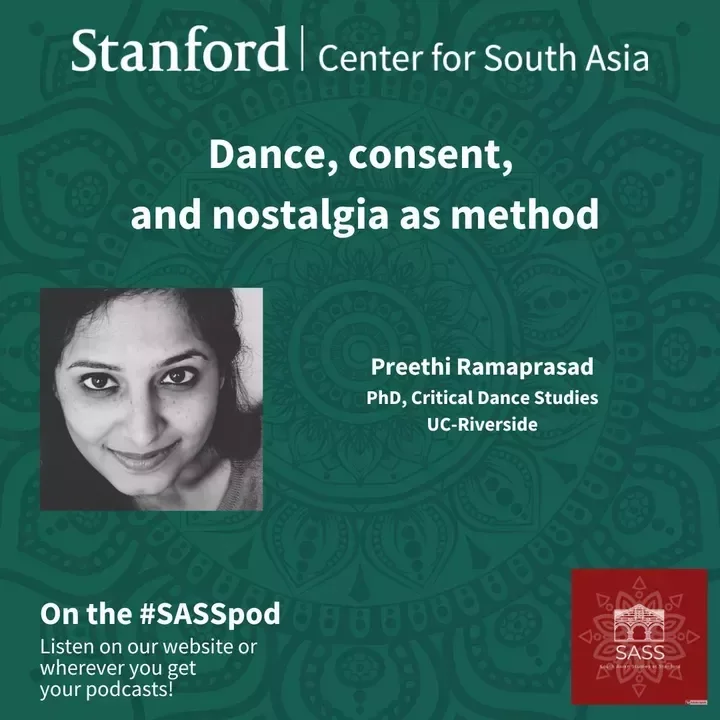
PODCAST | SEPT. 3, 2025Dance, consent, and nostalgia as method
Lalita du Perron welcomes scholar and dancer Preethi Ramaprasad to talk about their joint work on consent and dance, and Ramaprasad’s upcoming performed and curated art shows.
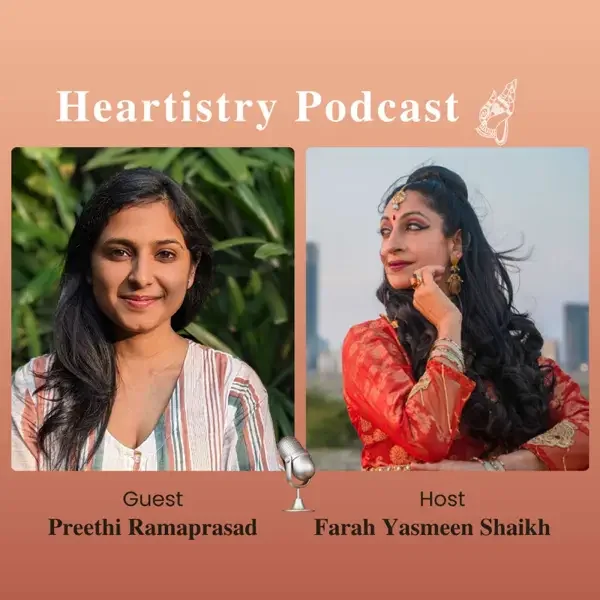
PODCAST | SEPT. 25, 2024Heartistry
Preethi's #heARTivism is steeped in her personal experience as a Bharatanatyam artist, along with her extensive research and commitment to representation and the performance of myth among transnational Bharatanatyam practitioners.
This conversation aired on @rukusavenueradio on the @iheartradio app, and is now available wherever you listen to your favorite podcasts